Resources for parents to support young people and families in relation to mental health and wellbeing
Support, Advice and Information
Safeguarding Resource Hub
A hub of national safeguarding resources for children, young people and all adults supporting them www.safeguardingresourcehub.co.uk
Hub of Hope – local services directory
Directory of local support services
www.hubofhope.co.uk
CAMHS – Child & Adolescent Mental Health Services
Crisis line 0151 293 3577
www.liverpoolcamhs.com/support/camhs-crisis-care-team
PAPYRUS – suicide prevention
0800 068 4141
www.papyrus-uk.org
Young Minds – 24/7 crisis support
Mental health crisis support
Text YM to 85258
www.youngminds.org.uk
KOOTH – over 14s on-line counselling
On-line counselling for 14-25 yr olds
www.kooth.com
Talk Liverpool – over 16s counselling
0151 228 2300
MindEd – information on mental health
www.minded.org.uk
YPAS – young people’s support service
0151 707 1025
www.ypas.org.uk
Samaritans – 24/7 listening support
24/7 listening support
Tel: 116 123
www.samaritans.org
Childline – 24/7 support and advice
0800 1111
Harmless – self harm support & advice
Information and support
www.harmless.org.uk
Child Bereavement UK – bereavement support
01928 577164
www.childbereavementuk.org/cheshire
ADDvanced Solutions – ASC/ADHD/SEND support & info
Information & support for ASD/ASC/ADHD/SEND/Neurodevelopmental conditions
0151 486 1788
http://www.addvancedsolutions.co.uk
Switchboard – LGBT+ support & advice
Information and support
0300 330 0630
www.switchboard.lgbt
Addaction – drugs information and advice
0151 541 2856
www.addaction.org.uk
REFUGE – domestic violence support and advice
www.refuge.org.uk
Exam Stress Support
Kooth’s Guide to Coping with Exam Stress
Training courses for Parents and Carers
Bitesize Mental health and wellbeing training
Print
At Liverpool College we recognise that for many years, schools delivering any kind of LGBT+ awareness work, have been doing so as part of their PSHE or RSE programmes. Far too often, this has been the single one hour of education on this topic that the students receive. This kind of LGBTQ+ specific education is important, but what is equally important, is LGBTQ+ inclusive lessons, a sprinkling of LGBTQ+ people and lives through all curriculum areas. Please follow the link for some examples of lessons used across the key stages:
Print
We understand that every pupil or student’s journey is unique, and we want to provide the help and support you needs as an LGBTQ+ student or someone questioning their identity. Our school is here to create a safe and inclusive environment where everyone feels welcome and valued.
You are not alone
Always remember that you’re not alone in your journey. There are people in our school and community who care about you and want to support you, including friends, family, and school staff.
Understanding LGBTQ+ terms
It’s essential to know and understand different LGBTQ+ terms like gender identity, sexual orientation, and gender expression. This knowledge can help you better understand yourself and others, and create an inclusive environment.
- Gender Identity is how we feel inside about being a boy, a girl, both, or neither. Some people might be transgender, which means their gender identity doesn’t match the body they were born in. Other people might be non-binary, which means they don’t feel like just a boy or a girl.
- Sexual Orientation is who we are attracted to or who we have romantic feelings for. People might be straight, gay, lesbian, or bisexual, depending on whether they are attracted to people of the opposite gender, the same gender, or both.
- Gender Expression is how we show our gender to the world. This might be through the clothes we wear, the way we style our hair, or how we act. Everyone’s gender expression is different, and it’s important to respect and celebrate each other’s unique styles.
- Queer is a word that some people in the LGBTQ+ community use to describe themselves. It can be a way of saying that they don’t fit into traditional ideas about gender and sexuality.
- Pronouns are the words we use to refer to someone when we don’t use their name. Common pronouns are he/him, she/her, and they/them. Some people might use different pronouns that match their gender identity. It’s important to respect and use the pronouns that people tell us they prefer, as this shows kindness and understanding.
Safe Space and Inclusivity
We strive to create a safe and inclusive environment for all students. This includes respecting pronouns, avoiding stereotypes, and challenging discrimination. We want everyone to feel comfortable and supported at school.
Bullying is not Ok
Bullying and harassment have no place in our school. If you experience or witness bullying, please report it to a trusted adult. We will work together to ensure a safe and welcoming environment for everyone.
Wellbeing and Support
Taking care of your mental health and wellbeing is important. Don’t hesitate to talk to someone you trust, practice self-care, and seek support when you need it. We’re here to help you through your journey.
Coming Out
If you decide to come out to others about your LGBTQ+ identity, remember to choose the right time and place, be honest and clear, and be prepared for different reactions. Our school community is here to support you in this brave step.
Together, we can create a school community where everyone feels safe, supported, and valued. Our school is committed to providing pastoral support for all students, including LGBTQ+ students and those questioning their identity. Remember, you’re never alone, and we’re here to help.
Support in Primary Phase Support in Secondary Phase
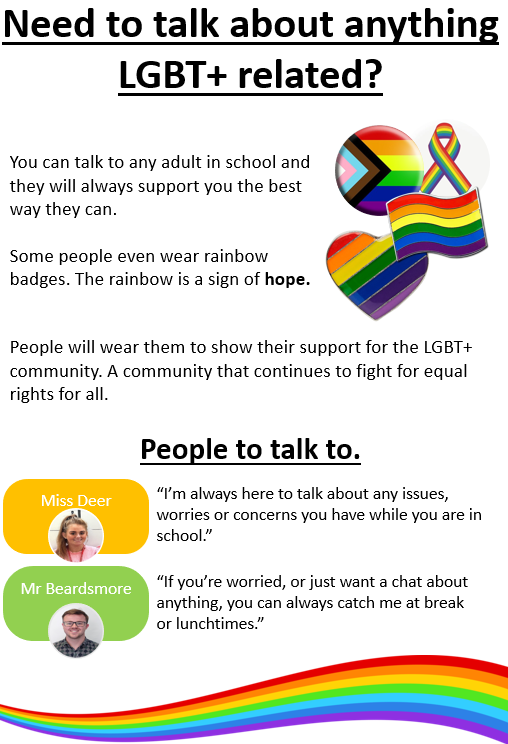
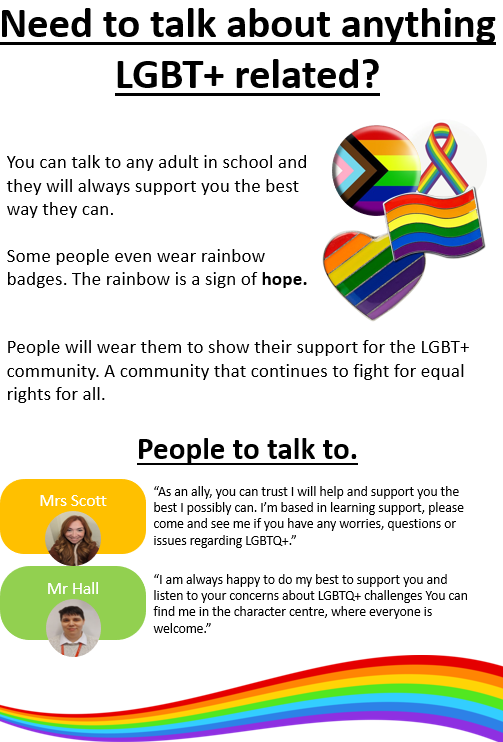
FURTHER RESOURCES & SUPPORT FOR LGBTQ+ STUDENTS AND FAMILIES
- Switchboard LGBT+ helpline provide an information, support and referral service for lesbians, gay men and bisexual and trans people – and anyone considering issues around their sexuality and/or gender identity.
- Stonewall have information, resources and campaigns for the LGBT community and beyond.
- Mind Out is run by mind, it is an online one on one support for LGBTQI+ people who are experiencing mental health difficulties.
- Student Pride run annual, national events for LGBTQ+ students across the country with fantastic guest speakers and panel discussions.
-
The Proud Trust provide support to young people aged 14-25 who are LGBT across the North West through youth groups and 1-2-1 support, and have a number of free online guides, as well as research.
-
GYRO are award winning LGBTQ+ youth groups for children & young people aged 11-25 years, who may be exploring sexuality and/or gender identity. GYRO has existed in some form since 1976 making it one of the oldest LGBTQ+ youth provisions in the country (as far as we can see)!
Print